Epithalon activates the expression of the telomerase reverse transcriptase (hTERT) gene, which encodes the catalytic subunit of telomerase. By upregulating hTERT, epithalon enables telomerase to add TTAGGG repeats to the 3' ends of chromosomal telomeres, counteracting the progressive shortening that occurs during DNA replication. This telomere maintenance is associated with extended replicative capacity of somatic cells and is a key area of cellular longevity research.
Research Use Only
Epithalon — Telomerase-Activating Research Peptide
A synthetic tetrapeptide (Ala-Glu-Asp-Gly) based on the natural epithalamin extract, studied for its ability to activate telomerase and promote telomere elongation.
Telomere BiologyCellular Protection
CAS 307297-39-8 • 390.35 g/mol • Prepared for research use • Per research workflow
Epithalon Structure
Reference identifiers are batch-specific for coded materials and are documented on the lot COA/SDS rather than inferred or estimated.
Mechanism of Action
Epithalon Overview
Epithalon (also spelled Epitalon) is a synthetic tetrapeptide with the sequence Ala-Glu-Asp-Gly, developed by Professor Vladimir Khavinson at the St. Petersburg Institute of Bioregulation and Gerontology. It is a synthetic analog of epithalamin, a polypeptide extract of the pineal gland that was shown to have geroprotective properties in decades of Russian biogerontology research. The primary mechanism of interest is epithalon's ability to activate telomerase, the enzyme responsible for maintaining and elongating telomeres — the protective caps at the ends of chromosomes that shorten with each cell division. Telomere shortening is a hallmark of cellular aging, and epithalon has been studied for telomerase reactivation in human somatic cell cultures that have reached replicative senescence in in-vitro models. Additional preclinical studies in animal models have studied effects on melatonin secretion, circadian rhythm pathways, antioxidant enzyme activity, and lifespan endpoints. PharmaOrder supplies COA-available epithalon for research use.
Purity & Testing
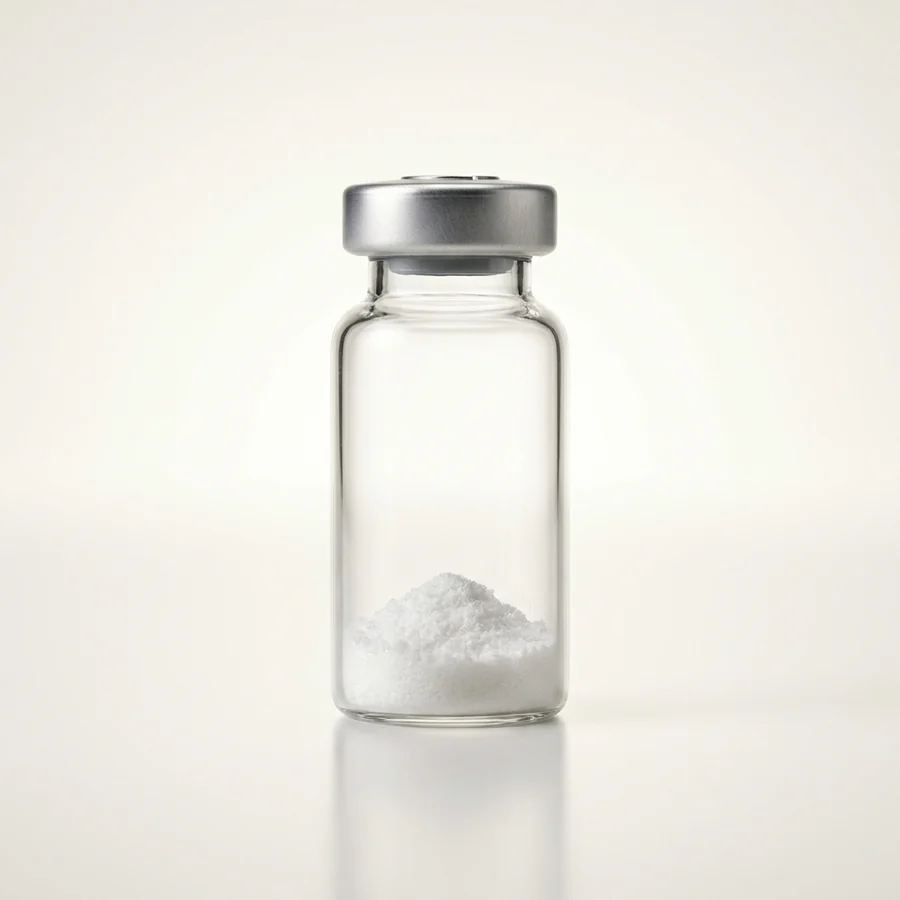
Epithalon is listed as 10mg lyophilized vial; 50mg lyophilized vial. Catalog identity: CAS 307297-39-8; formula C14H22N4O9; molecular weight 390.35 g/mol. The lot COA for Epithalon is available in your account. Finnrick Analytical performs HPLC purity analysis and mass spectrometry identity confirmation on that lot.
- Catalog configurations: 10mg lyophilized vial, 50mg lyophilized vial
- CAS: 307297-39-8
- Formula: C14H22N4O9
- Molecular weight: 390.35 g/mol
See the Epithalon COA page.
Storage & Handling
Store the lyophilized powder at -20°C, protected from light; bring to room temperature before opening. For in-vitro preparation use an appropriate laboratory diluent.
Shipping
Ships worldwide from 6 distribution centers via USPS Ground Advantage
Available for direct research purchase
Research-use-only products are sold strictly for laboratory and research purposes. By purchasing, you acknowledge that these products are not intended for human or veterinary use, and you agree to PharmaOrder's RUO terms of service.
Published Research
Selected peer-reviewed studies referenced in this product overview.
Peptide promotes telomere elongation in human cells
Khavinson VK, Bondarev IE, Butyugov AA. — Bulletin of Experimental Biology and Medicine (2003)
Demonstrated that epithalon activates telomerase and induces telomere elongation in human fetal fibroblast cultures that had reached replicative senescence.
Effect of epithalon on the age-related changes in the pineal gland and other neuroendocrine organs
Khavinson VK, Anisimov VN. — Advances in Gerontology (2000)
Showed epithalon normalized pineal melatonin secretion and circadian rhythms in aged rats, with associated improvements in neuroendocrine function.
Geroprotective effect of the synthetic tetrapeptide epitalon
Anisimov VN, Khavinson VK, Popovich IG, et al. — Bulletin of Experimental Biology and Medicine (2002)
Reported that chronic epithalon administration increased maximum lifespan in female mice and suppressed spontaneous tumor incidence.
FAQ
What is Epithalon?
Epithalon is a synthetic tetrapeptide (Ala-Glu-Asp-Gly) developed as an analog of the pineal gland extract epithalamin. It is studied primarily for its ability to activate telomerase and its effects on cellular longevity.
How does Epithalon relate to telomeres?
Epithalon activates telomerase, the enzyme that elongates telomeres. Telomeres are protective DNA sequences at chromosome ends that shorten with age. By reactivating telomerase in somatic cells, epithalon may counteract this aspect of cellular aging.
How should Epithalon be stored?
Store the lyophilized powder at -20 degrees C, protected from light, and bring to room temperature before opening. For in-vitro preparation use an appropriate laboratory diluent. Avoid repeated freeze-thaw cycles.
Editorial Review
Updated March 2026. Reviewed against product catalog, quality, and fulfillment standards. This page is educational and not instructions for human use. See our editorial standards and quality process.
Compare Epithalon
Related Products
Ready to order Epithalon?
In stock. Ships within 24 hours, with tracking.
Order Now